2025 / 2026 · Industrial Services · NCR · Flagship Case Study

Rebuilding a thirty year old diesel business.

Three decades of operational reputation. A hacked website with ten million indexed spam pages. Service revenue leaking through missed follow ups. A non existent digital presence in a market that increasingly buys digitally. This is the story of what we rebuilt, and how we knew what to rebuild and what to leave alone.

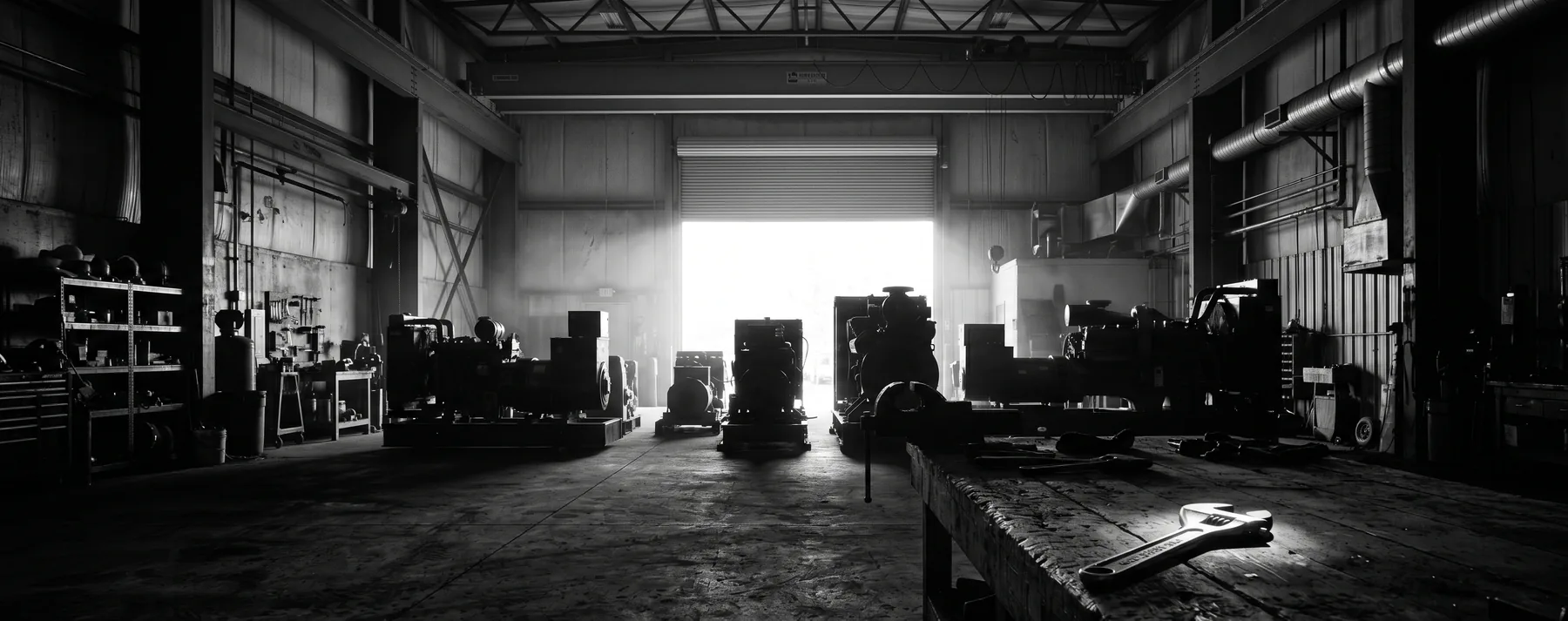
Black and white documentary photograph of an industrial workshop interior with light pouring in through an open shutter, silhouetting equipment.
Industry
Diesel engines, generators, industrial services
Location
NCR, India
Engagement
Late 2025, ongoing
Scope
Operations, software, growth, positioning, team
The Diagnosis

A business that worked in person, and almost nowhere else.

The business had been operating for thirty years. The customers respected it. The team was technically excellent. The owner had built something real, and it was working in person.

Almost nothing about its digital existence reflected this.

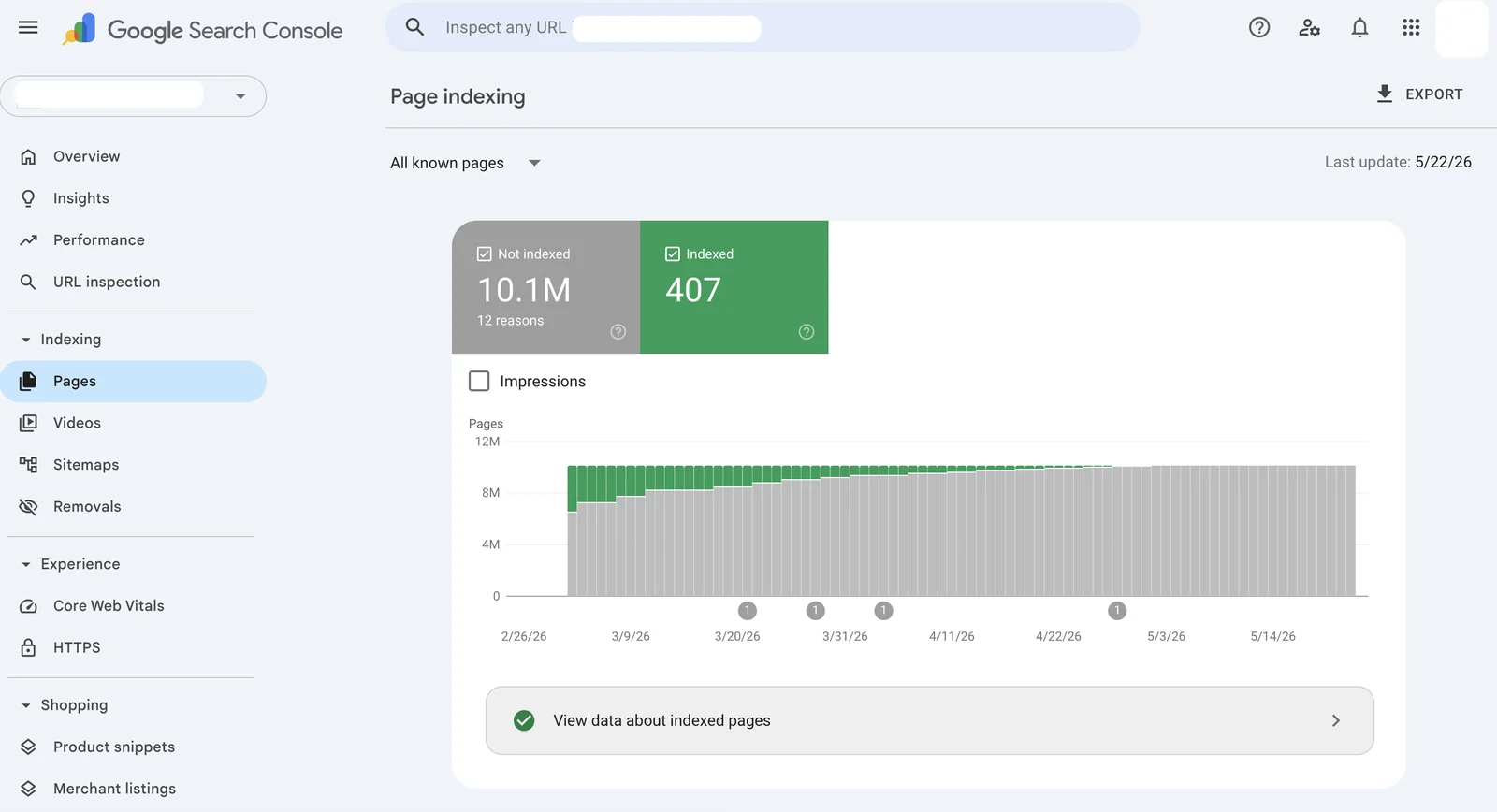
Google Search Console for the domain showing 10.1 million pages not-indexed against only 407 indexed, post-cleanup view.
The post hack search console state. Ten million junk pages indexed under the domain. Identifiers redacted.

The previous website had been built on a legacy PHP stack, and at some point it had been hacked. The result was ten million spam pages indexed under the domain. The site's search authority had collapsed. Anyone Googling the business would find either nothing useful or, worse, content that signaled the business was no longer trustworthy.

The service revenue, which is the engine of the business, was leaking quietly. AMC renewals were being missed because no one was tracking which customer's service was due. Technician job cards were hand written and unprofessional, which was acceptable for small customers but disqualified the business from quoting larger industrial clients. There was no follow up engine. There was no CRM. There was no system for systematic outbound. The team was good. The team was not equipped.

The Google Business Profile had seven reviews. The JustDial listing was stale. Lead generation existed almost entirely through word of mouth, which is wonderful until you need to grow faster than word of mouth alone.

This is the state we walked into.

What We Did Not Do

Most transformations fail by changing too much.

The temptation, in a business like this, is to add complexity everywhere. Bring in an enterprise CRM. Hire a content marketing team. Redo every brand asset. Add AI to everything.

We did almost none of that.

We did not bring in an enterprise CRM, because the existing software market does not understand the actual operational shape of a multi line industrial business. The CRM the team needed had to be built.

We did not add AI to customer facing functions, because trust in this industry is built person to person. AI belongs in the back office, in the work no human should be doing manually. Not in the front.

We did not redesign the brand from scratch. The brand the business had earned through thirty years of work was already strong. We sharpened it, we made it consistent, we positioned each revenue line clearly. We did not invent a new identity.

We did not replace the team. The team was the reason the business had reached this point. We added systems around the team so they could do what they had always done, but at much greater scale.

The discipline of transformation is in what you choose not to touch.

What We Built

Custom systems, built where systems were the answer.

Intervention 01

The service operations software.

Service revenue was the engine of the business and the place revenue was leaking most. We built a custom software system that does five things at once.

It tracks every service customer, calculates when the next service is due, and prompts the team to book the follow up appointment before the customer has to be reminded.

It generates the technician job card on site, in a format that looks like it came from a company a hundred times larger. The same job card is automatically converted into a professional PDF report and emailed to the customer the moment the service is completed. This is critical, because this industry runs on trust, and visible proof builds trust faster than any sales pitch.

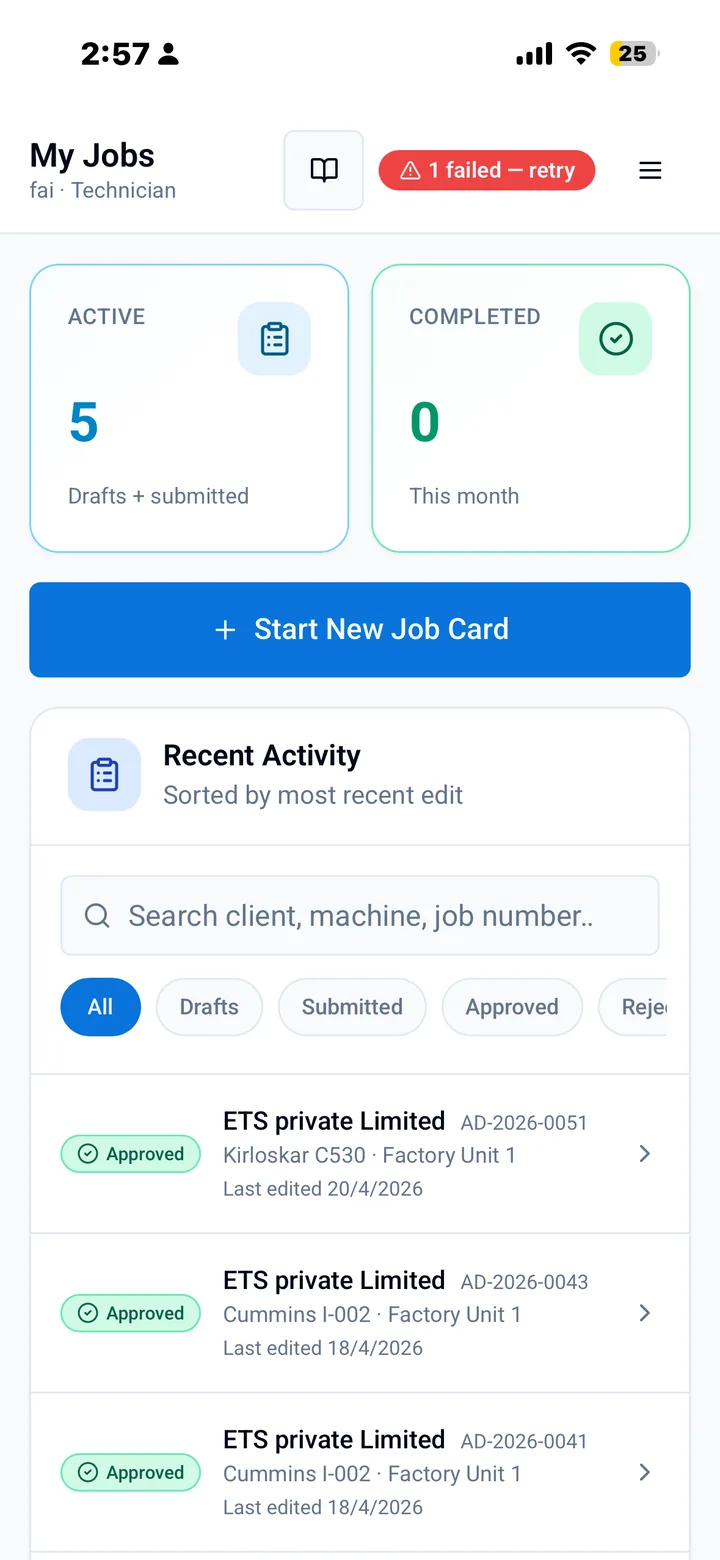
It is designed for non technical operators. The technicians using it on site are not engineers, and the UI was built specifically to work for them. Large buttons, minimal text, no nested menus.

It is designed for low network environments. Industrial service work happens in basements, generator rooms, and remote sites. The app works offline, syncs when the connection returns, and never loses data.

It includes an AMC reminder layer that automatically markets the AMC renewal to existing customers as their service date approaches. This converts a previously leaking revenue stream into a recurring engine.
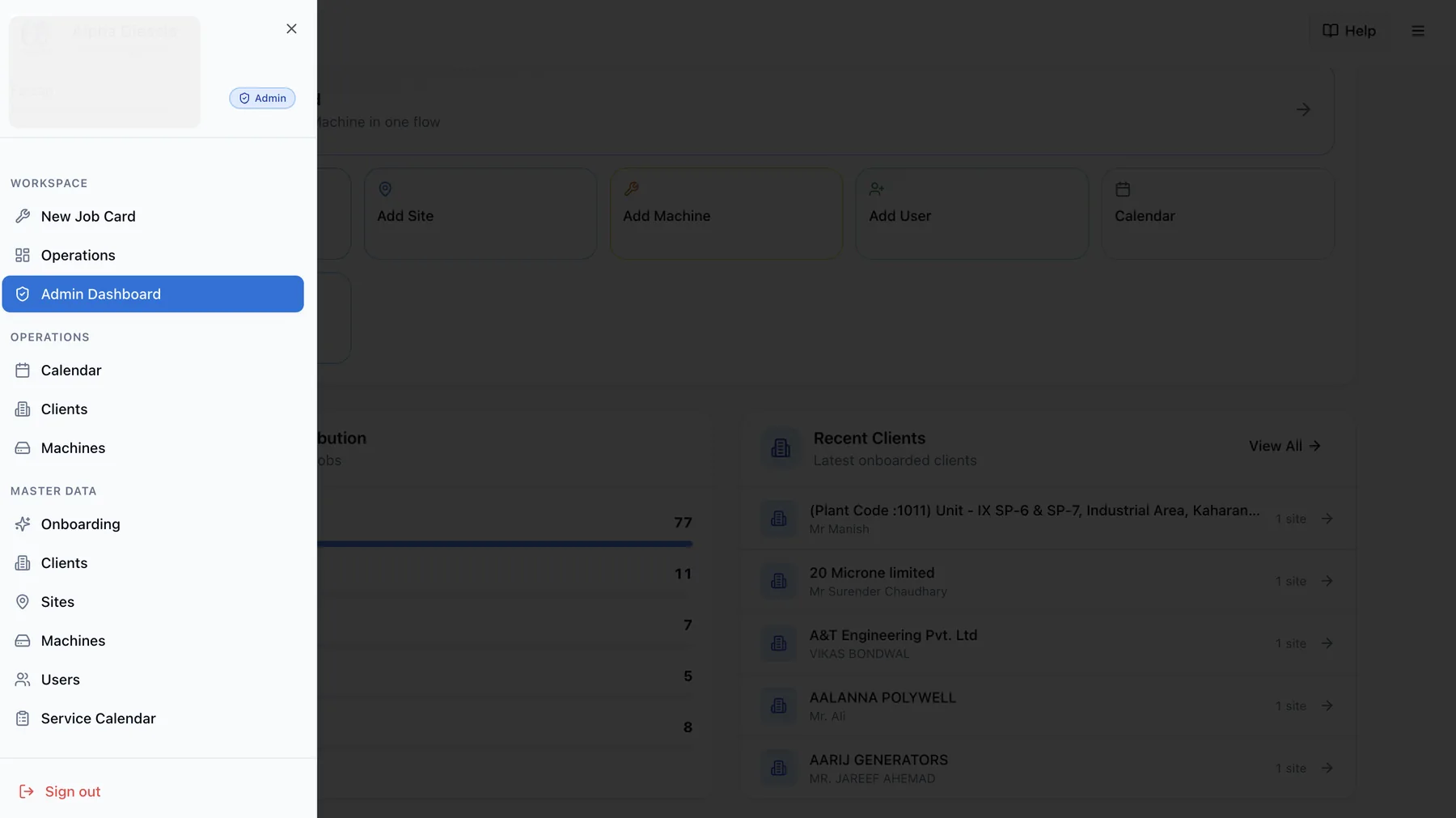
Operations team dashboard of the service operations software — desktop view of job cards and service intervals, anonymized.
Mobile technician interface — large buttons, offline-ready, designed for non-technical operators in low-network field environments.
Desktop operations view and mobile technician interface, in active daily use. Offline-ready in the field. Job cards convert to professional PDF reports auto-emailed to the customer on completion. Identifiers redacted.
Intervention 02

The custom CRM and lead engine.

Hubspot, Zoho, and the existing CRM market are designed for software companies, agencies, or generic sales teams. None of them fit a multi line industrial business where service, AMC, parts, equipment sales, and new business each have their own funnel logic.

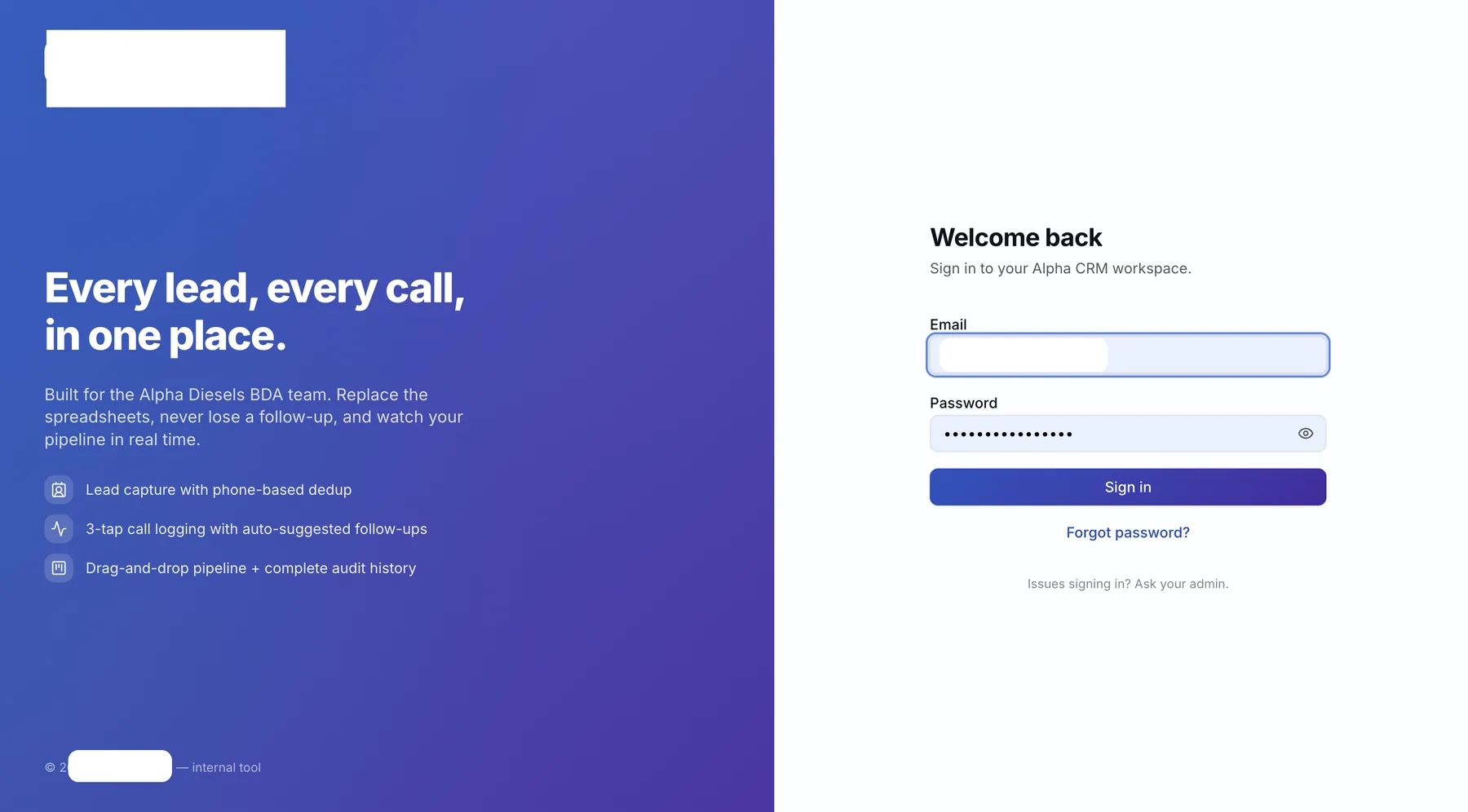
So we built a custom CRM around the actual workflow. It is operated by a small BDA team. Inbound leads from JustDial, IndiaMart, and the website all flow into the same pipeline. Outbound calling is scheduled, tracked, and reported. Each revenue line has its own conversion view. The CRM was built for the team that uses it, not for the team that designed it.

We did not build a complex tool. We built a focused tool. The simplicity is the feature.

Custom CRM lead pipeline and call schedule, built for a multi-line industrial business, anonymized.
Custom CRM, in daily use by a small BDA team. Inbound leads from web, JustDial, and IndiaMart flow into one pipeline. Outbound calling scheduled, tracked, reported. Identifiers redacted.
Intervention 03

The lean automation layer.

Across the business, there were dozens of repetitive tasks that no human should be doing manually. Lead scoring. Email follow ups. Report generation. Reminder sequences. Outbound call queuing.

We built a lean automation layer using existing tooling, with custom workflows where the tooling could not stretch. We did not build for the sake of building. Each automation displaces a real hour of manual work and frees the team to do work that requires judgment.

The architecture is built so that as AI capability matures, more of these workflows can be handed to AI. The system is ready. It does not depend on AI to function today.

What We Fine Tuned

Sometimes the system that exists is correct in shape but wrong in detail.

We did not build a new search platform. We cleaned the existing one.

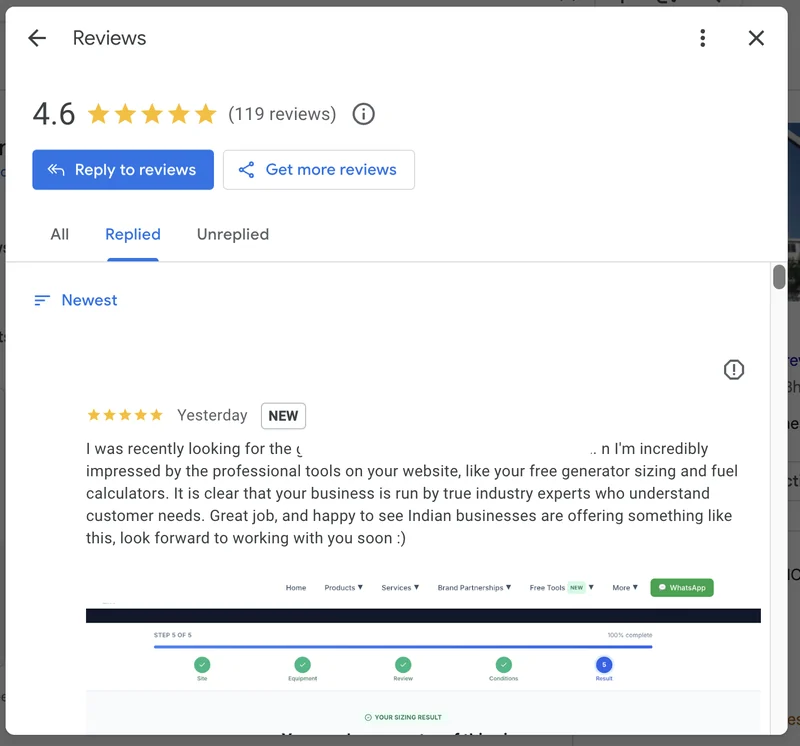
We did not invent a new review collection product. We engineered a two click review flow inside Google's existing tools, trained the team on how to ask, and optimized the Google Business Profile with the right service categories. Reviews went from seven to over one hundred and fifteen, with a four point seven average rating, in eleven months. We did not invent. We tuned.

We did not build a new content management system. We rewrote the existing website with the right architecture, the right copy, the right positioning for each revenue line, and the right SEO. We bought top plans on JustDial and IndiaMart and configured them with the same precision. We built location specific landing pages for every territory the business serves. These pages compound monthly.

We did not redo the brand. We made the brand consistent across every touch point the customer would now see.

This work is not less serious than building software. It is the same discipline applied at a different altitude.

7 → 115+
Verified Google Reviews · 11 months
4.7★
Average rating
Engineered a two-click review flow inside Google's own tools, trained the team on the ask, and optimized the GBP with the right service categories. No new product invented.
Google Business Profile reviews panel showing 4.6 stars across 119 reviews, with the most recent five star review visible.
The Playbook

Ten revenue lines. One operating playbook.

The business has at least ten distinct product and service lines: service contracts, AMC, spare parts, generator sales, industrial servicing, and several adjacent verticals. Each was operating in isolation, with its own logic, its own gaps, and its own opportunities.

We built a single operating playbook and applied it across every line. The diagnosis was different for each. The interventions were different for each. But the framework was the same. This is what made the rebuild replicable, scalable, and measurable.

A playbook is what separates a project from a system.

DIAGNOSE DESIGN DEPLOY LINE 01 · SERVICE LINE 02 · AMC LINE 03 · PARTS LINE 04 · GENERATOR SALES LINE 05 · INDUSTRIAL LINE 06 · OVERHAUL LINE 07 · RENTAL LINE 08 · CONSUMABLES LINE 09 · COMMISSIONING LINE 10 · TRAINING
The operating playbook applied across ten revenue lines. Each cell is its own diagnosis, its own design, its own deployment. Same framework, different work.
The Architecture

What the business runs on today.

What follows is the operating architecture the business now runs on. Not the marketing version. The actual systems, in their actual relationships.

GBP JustDial IndiaMart Web · Landing Lead EngineINBOUND ROUTER Custom CRMCORE Job-card SoftwareOPS + FIELD Automation LayerSCHEDULED + EVENT Location Pages Content Layer AMC Reminders AI Assisted Layer
The operating architecture in production. CRM sits at the centre; everything flows into it and out from it. AI is positioned as a layer that supports the system, not the core of it.
Outcomes, Operationally

The numbers we can publish.

Revenue is intentionally not disclosed. The metrics below are operational truth.

70
Verified Google reviews, in eleven months
0
Average rating, restored from no baseline
0
Spam pages cleaned from indexation post hack
0
Revenue lines now running on one systematized playbook
0 → 1
Custom operations software and CRM, designed, shipped, in daily use

The business runs on systems we did not have a year ago. We are not the same company we were.

Owner, identity withheld pending publication consent


What Is Next

The engagement is ongoing. Phase two scales the inbound engine, brings the AMC base to its full potential, and prepares the business for expansion into adjacent territories. We will publish updated numbers as the year closes.

Working with Acumen

If your business looks like this one did, let's talk.